Friday, September 19, 2008

Argentina expects to settle conflict for Easter Lama before end of year


Though there is agreement between the government trasandino and the Chilean in the points related to the construction and subsequent operation of the mine, has not been possible to achieve a common position on the payment of taxes.

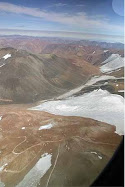
SANTIAGO.- TO a new meeting between the Chilean authorities and Argentinas, that should be produced in October, they cited the representatives trasandinos to try to settle the approval of the Lama Easter project, the first binational mining initiative in the world and that is located in the border of the regions of Atacama and San Juan.

Though there is agreement among both governments in the points related to the construction and subsequent operation of the mine, has not been possible to achieve a common position on the payment of taxes by the indivisible cross-border services, that is to say, how the taxes by this type of transactions will be distributed.

This discrepancy has delayed enough the start of the construction, considering that the Lama Easter departure date was, originally, 2006.

To be built, Easter Lama will be one of the greater mines of gold of the world. The project is to charged of the Canadian miner Barrick, that in Chile operates the mine of copper Zaldívar and possesses, besides, the prospect gold-bearing Hill you Marry him.

"The day from today the Ambassador (Argentine in Chile) González Garcia took contact with the authorities of the corresponding area in Chile, to transmit them that to the Argentine government interests to summarize the Binational Meeting of the working Party of the Mining Treaty the next month of October in Santiago of Chile", indicated the embassy through a public communiqué.

"It is expected that of that encounter a project of Resolution arise that loosen the question of the indivisible cross-border services. In this manner, would remain open its approval on the part of the Administrative Commission of the Treaty before end of year", added the text.

In August, the authorities of both countries met in Santiago, appointment of which a proposal delivered by the business arose. Said initiative was rejected by Argentina, that considered that its eventual application wounded its own tax regulation. On, not new proposals have arisen.

More still, the administrative permissions of the Argentine side conquer in December for which, of begin not the construction in that date, they should be dealt with again, what would imply a new delay.

SPANISH version

Si bien hay acuerdo entre el gobierno trasandino y el chileno en los puntos relacionados con la construcción y posterior operación de la mina, no ha sido posible lograr una postura común sobre el pago de impuestos.

SANTIAGO.- A una nueva reunión entre las autoridades chilenas y argentinas, que debiera producirse en octubre, citaron las representantes trasandinos para intentar zanjar la aprobación del proyecto Pascua Lama, la primera iniciativa minera binacional en el mundo y que se ubica en la frontera de las regiones de Atacama y San Juan.

Si bien hay acuerdo entre ambos gobiernos en los puntos relacionados con la construcción y posterior operación de la mina, no ha sido posible lograr una postura común sobre el pago de impuestos por los servicios transfronterizos indivisibles, es decir, cómo se distribuirán los impuestos por este tipo de transacciones.

Esta discrepancia ha retrasado bastante el inicio de la construcción, considerando que la fecha de partida de Pascua Lama era, originalmente, 2006.

De construirse, Pascua Lama será una de las mayores minas de oro del mundo. El proyecto está a cargó de la minera canadiense Barrick, que en Chile opera la mina de cobre Zaldívar y posee, además, el prospecto aurífero Cerro Casale.

"El día de hoy el Embajador (argentino en Chile) González García tomó contacto con las autoridades del área correspondiente en Chile, para transmitirles que al gobierno argentino le interesa concretar la Reunión Binacional del Grupo de Trabajo del Tratado Minero el próximo mes de octubre en Santiago de Chile", señaló la embajada a través de un comunicado público.

"Se espera que de ese encuentro surja un proyecto de Resolución que destrabe la cuestión de los servicios transfronterizos indivisibles. De esta manera, quedaría abierta su aprobación por parte de la Comisión Administradora del Tratado antes de fin de año", agregó el texto.

En agosto, las autoridades de ambos países se reunieron en Santiago, cita de la cual surgió una propuesta entregada por la empresa. Dicha iniciativa fue rechazada por Argentina, que consideró que su eventual aplicación vulneraba su propia normativa tributaria. En adelante, no han surgido nuevas propuestas.

Más aún, los permisos administrativos del lado argentino vencen en diciembre por lo que, de no comenzar la construcción en esa fecha, deberán ser tramitados nuevamente, lo que implicaría un nuevo retraso.

Te Deum in Copiapo " Water is a Human Right"


check back...

Monday, August 18, 2008

PASCUA LAMA PARALYSIS SPOOKS INVESTORS


Print E-mail

Chile and Argentina's failure to reach an agreement on procedures for the controversial Pascua Lama mining project have jeopardized four other bi-national mining projects between the two nations, representing an investment of over US$5 billion, reported Chilean daily La Tercera this weekend.
As the first bi-national mining initiative to ever occur in Chile, Canadian company Barrick Gold’s Pascua Lama project was meant to set the administrative groundwork for future exploitation of the gold and mineral rich areas straddling the border. The controversial project, first proposed 20 years ago, has been delayed for two years and counting, as Argentina and Chile continue to haggle over tax revenue allocation issues (ST August 18).

The other projects hanging fire due to the delay in the Pascua Llama deal, according to El Mercurio’s report, include the Tenke Mining and CVRD’s Las Flechas project, Xstrata Copper’s Pachón project, Lundin and Jogmec’s Vicuña project and the hitherto paralyzed Amos Andrés project with Río Tinto. All of these mining initiatives are taking their lead from Pascua Lama, and Chile and Argentina's failure to come to a concrete agreement is spooking investors.

Still, the obstacles for the mining initiatives have not included consideration of the large-scale environmental damage the projects entail, nor grassroots resistance to the projects (ST May 8). Though approved by Chile's National Environmental Commission (CONAMA), the Pascua Lama project involves mining under glaciers, which have already been severely damaged by Barrick’s preliminary development work. The communities downstream also face the long-term contamination of their sole water supply, resulting in Barrick’s US$60 million “pay off” to the local downstream communities to keep them in line.

While the company refuses to comment, rumors within the mining sector have it that Barrick is considering cutting its losses with the bi-national agreement and making the mine exclusively on the Chilean side, which is where 80 percent of the current site lies.


SOURCES: LA TERCERA
By Colette Bernasconi ( editor@santiagotimes.clThis e-mail address is being protected from spam bots, you need JavaScript enabled to view it )

Saturday, August 16, 2008

"Hay algunos que quieren que Pascua-Lama no salga"


En medio de la incertidumbre por el futuro de la mina de oro Pascua Lama, José Luis Gioja dijo ayer que "lo que por ahí hay que tener ojo, lo que no es una acusación sino una observación, y es que hay algunos interesados en que el proyecto no salga. Hay algunos sanjuaninos que no los veo bien ubicados, y especialmente algunos chilenos que tienen intereses y que quieren que solamente se haga Pascua del lado de Chile". No obstante, oficialmente son optimistas con que la mina de oro se empiece a construir en septiembre, pese a las piedras en el camino (ver aparte).

El gobernador lanzó el análisis en momentos en que el proyecto minero de oro binacional está trabado principalmente porque Argentina y Chile no se ponen de acuerdo sobre dónde debe tributar la empresa Barrick. Los avances en las negociaciones fueron relativizados por el presidente de Barrick Sudamérica, Igor González, al inaugurar el jueves último el molino eólico de Veladero: "Todavía no contamos con los acuerdos tributarios binacionales y por lo tanto, no podemos anunciar el proyecto", dijo a este diario, una frase que fuentes gubernamentales calificaron como una "presión empresarial".

Según dijo el secretario de Minería local, Felipe Saavedra, el martes hay una reunión entre la empresa y el equipo oficial encabezado por el gobernador para seguir trabajando el tema tributario. Ayer también hubo una reunión para definir los permisos sectoriales.

"A nivel nacional sabemos que el secretario de Minería de la Nación nos envía informes periódicamente diciendo que se está trabajando, que se están resolviendo estos problemas, y ellos también son optimistas, de que vamos a contar con todos los instrumentos necesarios para que la empresa pueda comenzar la construcción de la mina", dijo Saavedra. Agregó que: "la empresa tiene apuro por comenzar y sabemos que en septiembre comienza la temporada, y por eso queremos para esa fecha tener todo terminado para que pueda empezar a construir".

En esa línea, Gioja dijo "estamos trabajando y bien, haciendo todos los esfuerzos desde la provincia, y también desde la Nación para ir cerrando los problemas que existen, y confiamos plenamente que antes de fin de año vamos a estar trabajando en el proyecto".

Tuesday, August 12, 2008

PASCUA LAMA MINE PLANS STILL AT STANDSTILL


Plans for Chile and Argentina's first shared mining project has hit a two-year delay as Argentinean President Cristina Fernández neglected to approve Chile's tax revenue distribution proposals, Chilean daily El Mercurio reported Monday.
After months of discussions, the Chilean government had sent Fernández a project for Chile to collect 80 percent of the taxes from Pascua Lama's gold, silver and copper mining operations that straddle the Chilean-Argentinean border, given that the majority of the deposits are located on Chile's side of the Andes mountain range in Region III. Argentina has insisted on a 50-50 split of the revenue.

Chile modified its tax distribution proposal in June in Argentina's favor as a solution to the split, but Argentina still found the deal insufficient. Since Argentina is confronting agriculture strikes and fighting tax battles within its own country, the Fernández government has put the proposal aside and dialogue between trans-Andean authorities has been shut off.

As several other million-dollar projects are collecting dust within the Bi-national Commission for the Mining Deal, authorities stress that the resolution to the Pascua Lama mine is important in order for other bi-national projects to proceed.

More than 17 million ounces of gold, as well as silver and copper deposits, sit in the mine-to-be of Canadian driller Barrick Gold, who had hoped to begin a US$3 billion mine construction in September (ST May 19). But delays in the tax revenue allocation plan, various sector permits pending in Argentina and resurfacing environmental contamination concerns (ST May 8) have pushed construction plans back two years.

If Pascua Lama is constructed, Chile's second largest gold source would produce 600,000 ounces of gold and 23 million ounces of silver a year, as well as smaller quantities of copper. The mine's tax revenues would be expected to sum up to US$7 billion in total (ST Sept 12, 2007).

SOURCE: EL MERCURIO
By Elaine Ramirez ( editor@santiagotimes.clThis e-mail address is being protected from spam bots, you need JavaScript enabled to view it )

Friday, August 8, 2008

CHILE'S REGION III SURPASSES REGION II IN MINING EXPLORATION


PDF Print E-mail
Friday, 08 August 2008
The Atacama zone of Chile’s Region III registered 8,518 mining exploration grants in 2007, an increase of 11.6 percent, surpassing the 7,044 grants in Antofagasta (Region II) for the first time ever. According to the latest Yearly Report on Chilean Mining, published by the National Service of Mining and Geology (SERNAGEOMIN), Atacama accounted for 22.7 percent of the Chilean mining exploration area, edging out Antofagasta’s 22.4 percent share.
The vast area and abundance of exploration opportunities in Atacama have made the zone the most active mining site in Chile. Atacama boasted 2,326,700 hectares (1 hectare equals 10,000 square meters) of mining sites in 2007, compared to Antofagasta’s 2,298,400 hectares, which dropped by 23 percent from 2006.

“Atacama’s large diversity and great potential from the geological standpoint is attracting exploration from all types of companies,” said Juan Carlos Guajardo, executive director of the Center for Copper and Mining Studies (CESCO). “Region III has large deposits of copper and gold as well as titanium and nonmetallic minerals. Because of this, Atacama is generating a lot of interest from a variety of miners.”

Alejandro Vío, national director of SERNAGEOMIN, believes that more junior mining companies are exploring Region III due to its great stock of mining sites, which is creating an important dynamic in terms of mining exploration.

Over US$7 billion has been invested in the region, according to government estimates. Among the main projects in the zone are Pascua Lama (Barrick Gold), Relincho (Tech Cominco), Caserones (Nippon Mining), El Morro (Xstrata Copper and Metallica Resources Limited) and Inca de Oro.

Next Sunday the National Society of Mining (SONAMI) will celebrate a “Mining Day” in the Atacama city of Tierra Amarilla, because of the leading role the area is playing in Chile’s mining industry. President Michelle Bachelet will attend the event, together with public and private authorities.

Tuesday, May 6, 2008

Barrick Shareholders ask to vote on shareholder proposal on Pascua Lama project


(See video clip of Pascua Lama proposal below)

For several years now, the RRSE follows closely the various developments in connection with the Pascua-Lama project, put forward by the mining company Barrick Gold of Canada. Both in its scope (the project has a concession of 3 041 square km) and by its location overlooking the border of Chile and Argentina (in the middle of a semi-arid and desert at an altitude of 3 800 5 to 200 meters, the RRSE is of the opinion that this project presents significant risks with respect to the quality and accessibility of water for local people.

Following the precautionary principle, and considering that:


* Water is essential to life and the realization of all human rights; Water is essential to life and the realization of all human rights;

* The Pascua Lama mine will be located in a seismic zone, high elevation, upstream of the few sources of water of two inhabited valleys in Chile and Argentina that extraction by cyanidation will and that the complex will produce large quantities of dust and acid drainage, the Pascua Lama mine will be located in a seismic zone, high elevation, upstream of the few sources of water of two inhabited valleys in Chile and Argentina that extraction by cyanidation will and that the complex will produce large dust quantities and acid drainage;

* An accident, natural or industrial, could have significant and irreversible effect on the quantity and quality of water in the region, as well as the reputation and profitability of Barrick, an accident, natural or industrial, could have significant and irreversible effect on the quantity and quality of water in the region, as well as the reputation and profitability of Barrick;


The RRSE offered by way of a shareholder proposal that:


* Hires a management advisory panel of experts of international renown, independent in fact and in appearance, and familiar with best practices in relevant disciplines, for the reassurance on all aspects of the project, including the monitoring of post-safety exploitation; management engage an advisory panel of experts of international renown, independent in fact and in appearance, and familiar with best practices in relevant disciplines, for the reassurance on all aspects of the project, including follow-up safety post-operation;

* The panel released a summary annual independent recommendations of its members, the panel makes public an annual summary of the recommendations of independent members;

* The direction is not bound by the panel recommendations, but says, if so, why she chose not to follow the recommendations. management is not bound by the panel recommendations, but says, if so, why she chose not to follow the recommendations.

2009 Barrick Gold Shareholders meeting

© RRSE

Monday, April 28, 2008

Veladero Fronter of Chile /Argentina


Today along with another small crew of Canadian filmmakers from Canada along with some residents of the Valley of Husaco traveled several hours to the Barrick Gold, Veladero project.
WE left out our destination at 7am for the 3hour drive to the last small town of El Corral before travelling again 3 more hours to the frontier of Chile and Argentina


Concillors Luis Fuara and as well as Olca Co-ordinator and longtime friend and alley of the Anti Pascua Lama movement. It was the first time for most to travel this far outside of the valley to where several mining companys have been working in exploration.

Friday, April 11, 2008

Barrick tour of El Indio


Today along with the Alcaldesa of Vicuña Gloria Torres and representatives from community we visited the Mine El Indio In the III Region of Chile. We left Compania Minera Nevada's offices at 7am for the 3+ hour drive to the project with the superintendente of sustainable development of Barrick, Henry Martínez .

Prior to leaving we had to have a health exam with a doctor to be authorized to travel to the project .Upon arrival we had to follow up with another health exam on the day of to see if we were fit to travel up to the altitude of 4000m+ .

We were then treated to a lunch and video presentation of the Plan of Closure for El Indio as well as the many other projects of Barrick worldwide. People afterward were able to openly ask whatever question they had about the projects past and future operations. Some of the people's questions were quite about the negatives effects of the mines history up to this point.


check back to read rest of article

Sunday, April 1, 2007

Leaving Chile

After 4 months and 6 days in chile I am finally returning back to my other home of Toronto, Canada. It has been an incredible time here full of many firsts for me.
including my first Chilean passport, my first (adult) birthday in the city I was also born as well as dating my first Chilean girlfriend Carolina.
This farewell is bitter sweet as I say goodbye to all my new friends and family here that I have made. I feel that this is what I have been missing all my life since Leaving Chile for Canada over 30+ years ago. Living here and learning about my country its beautiful land and culture I have also learned much about myself.

"This trip travelling throughout Chile has changed me more than anything .I am not me anymore , at least I am not the same me I was before left."