Barrick buys governments open up the exploitation of Pascua Lama
We denounce the interference of the transnational Barrick Gold mining in the internal decisions of the Republics of Chile and Argentina, after which senior executives of the two Canadian mining sustain top level meetings to press for the mandatory two nations, for the sole purpose unlock of the binational project Pascua Lama resisted.
This is part of the pressures that executives of the mine had to explain to the annual shareholders meeting that Barrick made in Toronto, Canada, and nine years ago, has had to explain the reasons for delaying the construction of the project star of the transnational. This is because almost ten years ago that was environmentally Pascua Lama, and still can not draw an ounce of gold. Something not right with the Chilean-Argentine border to the giant gold.
As broadcast by the media, the meeting between Barrick and Bachelet was held at the Palacio de La Moneda in camera and without making statements to the press on Saturday April 25 at 18 hrs. The President received the Executive Director of the Canadian transnational, Aaron Regent, the Deputy Director of the company, José Antonio Urrutia, accompanied by Chilean Minister of Mining, Santiago González.
The same happened on April 15 in the neighboring Republic of Argentina, where the founder and current president of Barrick, Peter Munk, also held a meeting behind closed doors and no statements to the press with President Cristina Fernandez at the House Rosada, accompanied by one of the staunchest defenders of Barrick, the governor of San Juan, José Luis Gioja, alongside Aaron Regent.
Munk had left the company last year, but according to the press, will not leave until Barrick announced the initiation of construction of Pascua Lama, who is the star of the transnational project and now looks more like the karma of the company. Munk is why the announcement of plans to make long-awaited construction of the binational project these days.
For the ninth time he had to explain at the annual shareholders meeting on April 29 last, the governments of Chile and Argentina had taken a further step in the tax agreement, but were awaiting the final agreement to announce the holding power Project which threatens the life of the valley in Huasco Atacama. Somewhat vague so that the actions do not fall much, but keep the expectations for future economic returns.
Unpresentable is a visit of its kind, behind closed doors and without statements, when spreads on the new law on transparency of the state, labeled as scandalous that the senior executive of Barrick Gold have taken the opportunity to meet with the President of the Republic of Chile, where organizations are opposing the mining project, after almost ten years of struggle, only to have the Minister of Environment, Ana Lya Uriarte, who did not have the courage to review documents and government of the same company that realize the decrease in proceeds from the glaciers thousands of transnational intervention in the area. The same happened with the refusal of MEPs to vote on an inquiry by the Pascua Lama, who just retired and returned to vote not to approve other motions of the day. Happened five times in the National Congress of Chile. Neither the President has the will to receive the community Huasco valley at the government house, as it deserves in a "citizen government".
The only note that participation in this meeting, is an illegal action of a private company with the State of Chile, and thus with all citizens. Perhaps our President of Chile, think that the Director of Barrick Gold is a mining Chile ", such as the Mining Council advertised for people to believe that these are, indeed chilenas. However, the only company that provides truly Chile Codelco is in this guild, the other, almost do not pay taxes, and stop pollution, death, alcoholism and prostitution for where they spend. Responsible Mining Is that it?
The president of Barrick, Peter Munk, released from prison to an arms dealer, his former partner Adnan Kasshoggi. Today, global issues by Munk is a leading company that has run human rights where they have installed. It did so recently, Norway, who after a tough report, Barrick Gold excluded from pension funds by the human and ethical issues involved have a shareholder to a company in Papua New Guinea has been polluting a river with heavy metals, without evaluation of water quality, and hence he has been leaving the population susceptible to serious illnesses. ¿Meanwhile, in Chile it is at the Presidential Palace?
Unpresentable that Bachelet is not receiving the community to resist against this policy submissive in our national soil. The President could have asked for 15 workers killed in the operation of Pascua Lama that have occurred since 1994 in Chile, could also have requested information on the conditions that were laid off over 180 workers Huasco valley that excited by a better future were pressured to resign "voluntarily" after CONAMA approved the mining project. Could also ask why the only border crossing that has a "restricted" in Chile and is called Pascua Lama is coincidentally in the area of the mining project.
Denounce finally, that it is no coincidence that Munk has been through Chile and Argentina to try to unlock Pascua Lama, while Sebastian Bowen, assumed command as General Coordinator of the Coalition for a presidential candidate, Eduardo Frei (DC). Because while he was President Frei of Chile has signed next to the Carlos Menem trans Integration and Cooperation Treaty between Chile and Argentina mining in 1997, legal instrument that allows mining projects on the border, as the Pascua Lama project. But also, because last year Bowen appeared on November 2 with the executives of Barrick to hold the line on what they called "Atacama Commitment," and that has been damaging to the community of the valley Tuesday.
We can not fail to mention that Frei is also in the Political Committee to Belisario Velasco, father of the founders of Extend Communications, a strategic advisory firm that Barrick in Chile.
Is it possible to think that this reunion would have committed money to the presidential campaign of his coalition in exchange for the exploitation of the mining project resisted most of the last time called Pascua Lama?
Coordinator Against Pascua-Lama Santiago
Semillas de Agua
Showing posts with label Barrick Gold. Show all posts
Showing posts with label Barrick Gold. Show all posts
Sunday, May 3, 2009


Friday, January 30, 2009
Chile, Argentina nearing Pascua Lama tax deal

According to a recent Reuters story Jan 29 (Reuters) "Chile, Argentina nearing Pascua Lama tax deal"authorities in Chile and Argentina are very close to reaching a tax agreement that would allow miner Barrick Gold (ABX.TO) to start work on one of the world's largest gold projects, the Pascua Lama Project , a government minister told Reuters on Thursday.
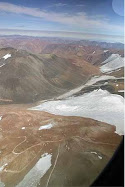
The Pascua Lama Project located in northern border of Chile and Argentina was the world's largest mega-gold find , after the Cerro Caslle project in the Copiapo area. It is located about 5,000 meters in altitude is currently the largest never open gold mine with a treasure of some 18 million ounces of gold .
The project, owned by Canada's Barrick Gold Corp (ABX.TO), overcame years of environmental challenges after Barrick agreed to leave nearby glaciers untouched. The project previously has been mired in years of delays due to low gold prices in 2000-2003 after the first SEIA study, a 2nd environmental study in 2004 that were suppose to relocate 3 glaciers (ice deposits) , as well as Supreme Court with a disgruntled miner Rodolfo Villar who’s case to this day also stalled the project .
The latest delay has been because of ongoing tax dispute between the host countries and discussing how to tax what they call transborder services, or services rendered by individual companies on either side of the border. As 80% of the gold is located on the Chilean side and 20% of the mineral on the Argentina side.
Mine construction in the Andes mountains of Chile do have a narrow window of opportunity , according to Henry Martinez of Barrick Gold, “the mining season to travel to Pascua Lama is between September 15 through end of March in some very warm years you can go there as late as did April". Construction is already years behind schedule since being approved in Chile and Argentina in 2006.
Sergio Gonzalez Minister of Mining said Barrick has not given Chile and Argentina a deadline to reach a deal. Even after over two years since the project was approved by the governments by both countries.
However in Sept of 2007 during a presentation at Icare when the project was said to begin construction that Fall ,the Canadian multinational Barrick Gold, could begin to be built only in Chile, following the lack of agreement with Argentina on the tax structure would the site., " Pascua Lama has all environmental permits approved , therefore, from that standpoint, in Chile in a position to start the project if they so wish, and so agree as a company," said Gonzalez said to reporters.
However this is also not true as all permits in Chile are not 100% ready according to Placdio Avilia Comana in the 3rd Region of Chile. A letter from Lucio Cuenca of OLCA was sent to him regarding as many as 14 permits in Chile that are not ready. “
If they were do this project in Chile only they would have to enter the Environmental Impact Study again. says Placido Avila.
Another major issue as to why they can not do this project in Chile only as the minister has said according to Fernando Gray, “The water , Barrick doesn’t have enough water to do this project in Chile only. They would need about 600l/s for the water treatment plant for its use in Chile, the 40- 50 l/s that Conama and company has always said they will use , however according to Gray that is only for the part of Extration: the Pascua camp , for the roads . That it was why they move the treatment plant to Argentina because they have the water”. Fernando Gray is the former President of La Junta de Viglencia of the Hausco Valley during 1992-2004 who was part of the 8 direcotrs who signed the initial $60 million protocol with Barrick and is very familiar with the history of the Barrick Gold Company in the Hausco valley.
Another small aspect that has not been discussed in the media is that Environmental agreements in Argentina eventually expire if the project has not begun or started construction unlike Chile ‘s Environmental agreement . The agreement signed by Barrick and the Argentina government authorities on Feb 15, 2006 has expired after Dec 31, 2008 so this would also require another SEIA study in Argentina further delaying the project according to Luis Faura former concillor of Alto Del Carmen.
However in a letter from Lucio Cuenca of OLCA was sent to Placdio Avilia of Comana of the 3rd Region of Chile regarding as many as 11 sectorial permits in Chile that are not not ready and the project for this reason can also not begin . “ A majority of the 11 permits are completed or advanced”. One such example is the bypass in the area of Alto del Carmen needs to be constructed before the construction of the project.
"Imagine walking away from a major gold mine at this time," he said. "They have neither postponed nor put a deadline on this project." Barrick Gold Chairman told Reuters at the World Economic Forum meeting in Davos he expected prices for the metal to hit new record highs, spurred by serious concern about the U.S. currency and doubt about the state of the world economy.
"There will most likely be a deal very soon," Mine Minister Santiago Gonzalez said in an interview. "Progress is being made and there could be a happy ending very soon."s
What is clear with all these and many more issues not mentioned the project is still many years away from if ever begin construction.
Tuesday, August 12, 2008
PASCUA LAMA MINE PLANS STILL AT STANDSTILL

Plans for Chile and Argentina's first shared mining project has hit a two-year delay as Argentinean President Cristina Fernández neglected to approve Chile's tax revenue distribution proposals, Chilean daily El Mercurio reported Monday.
Chile modified its tax distribution proposal in June in Argentina's favor as a solution to the split, but Argentina still found the deal insufficient. Since Argentina is confronting agriculture strikes and fighting tax battles within its own country, the Fernández government has put the proposal aside and dialogue between trans-Andean authorities has been shut off.
As several other million-dollar projects are collecting dust within the Bi-national Commission for the Mining Deal, authorities stress that the resolution to the Pascua Lama mine is important in order for other bi-national projects to proceed.
More than 17 million ounces of gold, as well as silver and copper deposits, sit in the mine-to-be of Canadian driller Barrick Gold, who had hoped to begin a US$3 billion mine construction in September (ST May 19). But delays in the tax revenue allocation plan, various sector permits pending in Argentina and resurfacing environmental contamination concerns (ST May 8) have pushed construction plans back two years.
If Pascua Lama is constructed, Chile's second largest gold source would produce 600,000 ounces of gold and 23 million ounces of silver a year, as well as smaller quantities of copper. The mine's tax revenues would be expected to sum up to US$7 billion in total (ST Sept 12, 2007).
SOURCE: EL MERCURIO
By Elaine Ramirez ( editor@santiagotimes.cl)
Friday, August 8, 2008
CHILE'S REGION III SURPASSES REGION II IN MINING EXPLORATION
| |  |  |  |
| Friday, 08 August 2008 | |
| The Atacama zone of Chile’s Region III registered 8,518 mining exploration grants in 2007, an increase of 11.6 percent, surpassing the 7,044 grants in Antofagasta (Region II) for the first time ever. According to the latest Yearly Report on Chilean Mining, published by the National Service of Mining and Geology (SERNAGEOMIN), Atacama accounted for 22.7 percent of the Chilean mining exploration area, edging out Antofagasta’s 22.4 percent share. The vast area and abundance of exploration opportunities in Atacama have made the zone the most active mining site in Chile. Atacama boasted 2,326,700 hectares (1 hectare equals 10,000 square meters) of mining sites in 2007, compared to Antofagasta’s 2,298,400 hectares, which dropped by 23 percent from 2006. “Atacama’s large diversity and great potential from the geological standpoint is attracting exploration from all types of companies,” said Juan Carlos Guajardo, executive director of the Center for Copper and Mining Studies (CESCO). “Region III has large deposits of copper and gold as well as titanium and nonmetallic minerals. Because of this, Atacama is generating a lot of interest from a variety of miners.” Alejandro Vío, national director of SERNAGEOMIN, believes that more junior mining companies are exploring Region III due to its great stock of mining sites, which is creating an important dynamic in terms of mining exploration. Over US$7 billion has been invested in the region, according to government estimates. Among the main projects in the zone are Pascua Lama (Barrick Gold), Relincho (Tech Cominco), Caserones (Nippon Mining), El Morro (Xstrata Copper and Metallica Resources Limited) and Inca de Oro. Next Sunday the National Society of Mining (SONAMI) will celebrate a “Mining Day” in the Atacama city of Tierra Amarilla, because of the leading role the area is playing in Chile’s mining industry. President Michelle Bachelet will attend the event, together with public and private authorities. |
Tuesday, May 6, 2008
Barrick Shareholders ask to vote on shareholder proposal on Pascua Lama project


(See video clip of Pascua Lama proposal below)
For several years now, the RRSE follows closely the various developments in connection with the Pascua-Lama project, put forward by the mining company Barrick Gold of Canada. Both in its scope (the project has a concession of 3 041 square km) and by its location overlooking the border of Chile and Argentina (in the middle of a semi-arid and desert at an altitude of 3 800 5 to 200 meters, the RRSE is of the opinion that this project presents significant risks with respect to the quality and accessibility of water for local people.
Following the precautionary principle, and considering that:
* Water is essential to life and the realization of all human rights; Water is essential to life and the realization of all human rights;
* The Pascua Lama mine will be located in a seismic zone, high elevation, upstream of the few sources of water of two inhabited valleys in Chile and Argentina that extraction by cyanidation will and that the complex will produce large quantities of dust and acid drainage, the Pascua Lama mine will be located in a seismic zone, high elevation, upstream of the few sources of water of two inhabited valleys in Chile and Argentina that extraction by cyanidation will and that the complex will produce large dust quantities and acid drainage;
* An accident, natural or industrial, could have significant and irreversible effect on the quantity and quality of water in the region, as well as the reputation and profitability of Barrick, an accident, natural or industrial, could have significant and irreversible effect on the quantity and quality of water in the region, as well as the reputation and profitability of Barrick;
The RRSE offered by way of a shareholder proposal that:
* Hires a management advisory panel of experts of international renown, independent in fact and in appearance, and familiar with best practices in relevant disciplines, for the reassurance on all aspects of the project, including the monitoring of post-safety exploitation; management engage an advisory panel of experts of international renown, independent in fact and in appearance, and familiar with best practices in relevant disciplines, for the reassurance on all aspects of the project, including follow-up safety post-operation;
* The panel released a summary annual independent recommendations of its members, the panel makes public an annual summary of the recommendations of independent members;
* The direction is not bound by the panel recommendations, but says, if so, why she chose not to follow the recommendations. management is not bound by the panel recommendations, but says, if so, why she chose not to follow the recommendations.
2009 Barrick Gold Shareholders meeting
© RRSE
Monday, April 28, 2008
Veladero Fronter of Chile /Argentina

Today along with another small crew of Canadian filmmakers from Canada along with some residents of the Valley of Husaco traveled several hours to the Barrick Gold, Veladero project.
WE left out our destination at 7am for the 3hour drive to the last small town of El Corral before travelling again 3 more hours to the frontier of Chile and Argentina
Concillors Luis Fuara and as well as Olca Co-ordinator and longtime friend and alley of the Anti Pascua Lama movement. It was the first time for most to travel this far outside of the valley to where several mining companys have been working in exploration.
Friday, April 11, 2008
Barrick tour of El Indio


Today along with the Alcaldesa of Vicuña Gloria Torres and representatives from community we visited the Mine El Indio In the III Region of Chile. We left Compania Minera Nevada's offices at 7am for the 3+ hour drive to the project with the superintendente of sustainable development of Barrick, Henry Martínez .
Prior to leaving we had to have a health exam with a doctor to be authorized to travel to the project .Upon arrival we had to follow up with another health exam on the day of to see if we were fit to travel up to the altitude of 4000m+ .
We were then treated to a lunch and video presentation of the Plan of Closure for El Indio as well as the many other projects of Barrick worldwide. People afterward were able to openly ask whatever question they had about the projects past and future operations. Some of the people's questions were quite about the negatives effects of the mines history up to this point.
check back to read rest of article
Subscribe to:
Posts (Atom)